
Praying with the Angels
Gloria in Excelsis Deo (52 Ways to Pray)

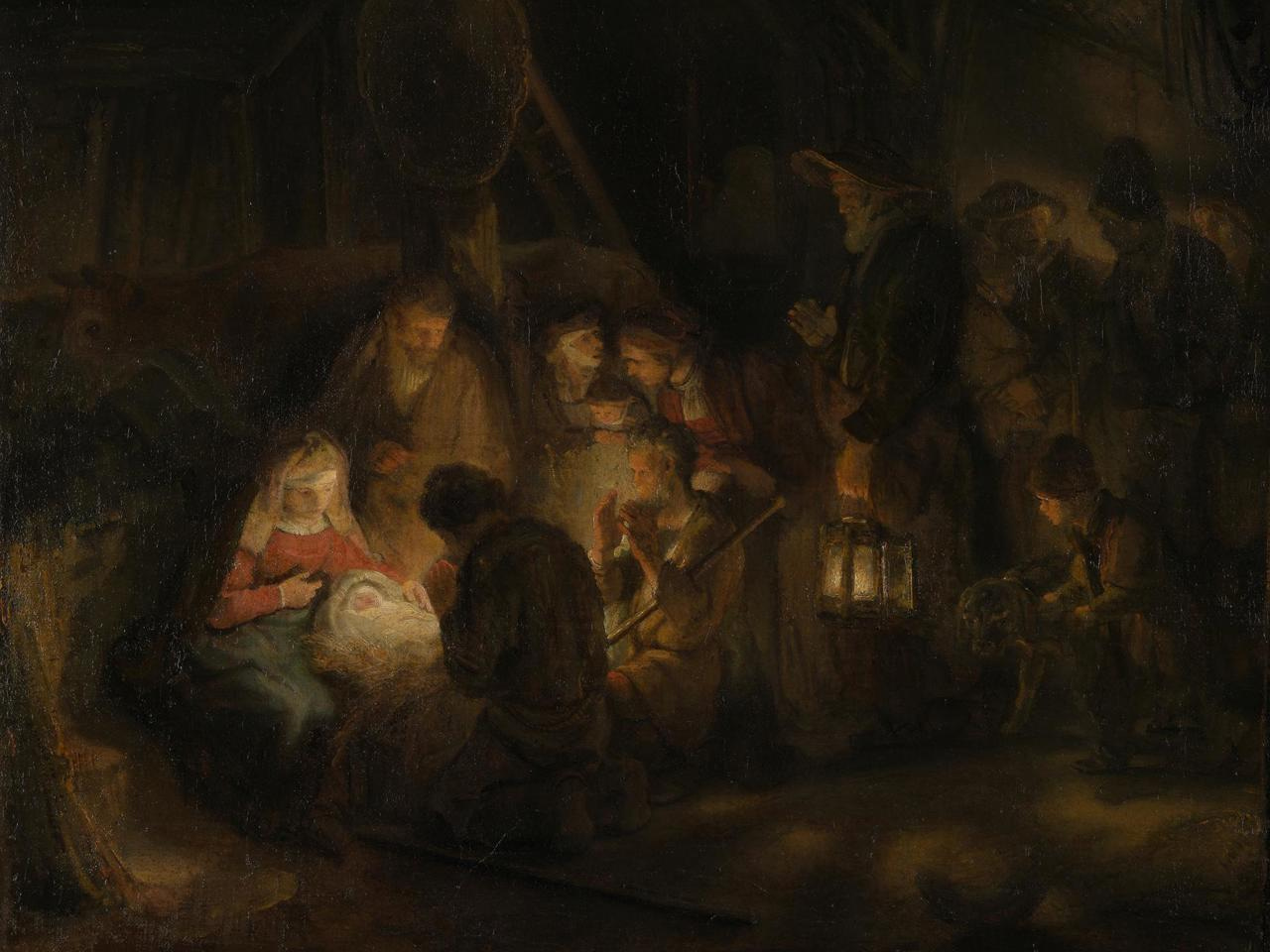
A mass of legend and literature has sprung from this single paradox; that the hands that had made the sun and stars were too small to reach the huge heads of the cattle.
GK Chesterton, The Everlasting Man
Advent is coming to an end. We’ve held our breath; we’ve waited on the Lord. Now, at last, he is about to be born.
It’s fitting that the same God who sent his son by way of a virgin in a manger would announce the coming of Immanuel first to a few unsuspecting shepherds in a nearby field.
Nothing about the Incarnation went as any one of us would have imagined. There was no crown, no triumphant procession, no toppling of kings. Just the Most High waking up in our reality in the most humble of entrances.
That’s the paradox that GK Chesterton pondered, and that mankind has been musing over ever since: that infinite glory would condescend to the ordinary.
For those simple shepherds, it was another night among the herd, under the stars. A night like every other.
But then:
9 An angel of the Lord appeared to them, and the glory of the Lord shone around them, and they were terrified.10 But the angel said to them, “Do not be afraid. I bring you good news that will cause great joy for all the people.11 Today in the town of David a Savior has been born to you; he is the Messiah, the Lord.12 This will be a sign to you: You will find a baby wrapped in cloths and lying in a manger.”
Luke 2
And then heaven opened.
A great ensemble of divine beings appeared, singing all together:
14 “Glory to God in the highest heaven,
and on earth peace to those on whom his favor rests.”
And their praise that night, in a common field, to a handful of shepherds and a flock of sleeping sheep, has continued to echo across the earth, through the church, ever since.
The Great Doxology
Gloria in Exclesis Deo is among the oldest and most cherished prayers in the church. Sometimes known as “the hymn of the angels,” it is a mainstay of the Catholic mass, a traditional element of daily matins (morning prayer) in the Orthodox church, and a beloved Christmas anthem across Protestant congregations.
The Gloria, which eventually came to be called “The Great Doxology,” was being chanted throughout the early church in the late 200’s AD, even before the Bible had been canonized. Its first lines pay homage to the praise of the angels that we read in Luke 2.
When we sing these words, we join in a great chorus with our ancestors, with the historic church, and with the very host of heaven.
When we sing these words, we are reincarnating, in a way, that fateful night over the fields of Judea when the ordinary became extraordinary, when the long waiting of God’s people finally came to an end, when the son of God was born unto us.
Practice
Say these words aloud. Say them with your family. Take it slow, and pause along the way. Let each line ring in your heart like a trumpet.
As you pray these ancient words, remember the shepherds in the field, startled awake by the music of heaven.
Remember the first saints, huddled around candles in the shadows of the Roman Empire as they celebrated the birth of the Savior.
Remember Mary and Joseph, enwrapped with joy and wonder and trepidation as they cradled the infant Jesus.
Gloria in Excelsis Deo:
Glory to God in the highest,
and on earth peace to people of good will.We praise you,
we bless you,
we adore you,
we glorify you,
we give you thanks for your great glory,Lord God, heavenly King,
O God, almighty Father.Lord Jesus Christ, Only Begotten Son,
Lord God, Lamb of God, Son of the Father,
you take away the sins of the world, have mercy on us;
you take away the sins of the world, receive our prayer;
you are seated at the right hand of the Father, have mercy on us.For you alone are the Holy One,
you alone are the Lord,
you alone are the Most High,
Jesus Christ,
with the Holy Spirit,
in the glory of God the Father.
Amen.
To hear a traditional singing of the Gloria from the Orthodox tradition:
I’d love to hear from you—
What part of the Christmas story stands out to you most?
What feelings come up when you think about praying the same words that the angels sang on the night Christ was born?
Another prayer fitting for Christmas:
The Banned Prayer

Between 1976 and 1983, as many as 30,000 people disappeared throughout throughout Argentina.
If this stirred something in you, share it with a friend who’s craving a deeper way to pray:
To receive more posts like this and join the community, subscribe now:
One more thing:

Last week I released the new, updated version of my Year End Review resource. This is a great way to end your year with reflection and intention, to catch your breath and take inventory of what God has done before the next season begins.
You can download it for free here:
Merry Christmas
Love the Gloria, yes, sung in the Catholic Mass; my first exposure was as a Protestant through John Michael Talbot’s Glory to God, which I’ve been listening to for over 40 years!