
The Banned Prayer
The Magnificat (52 Ways to Pray)

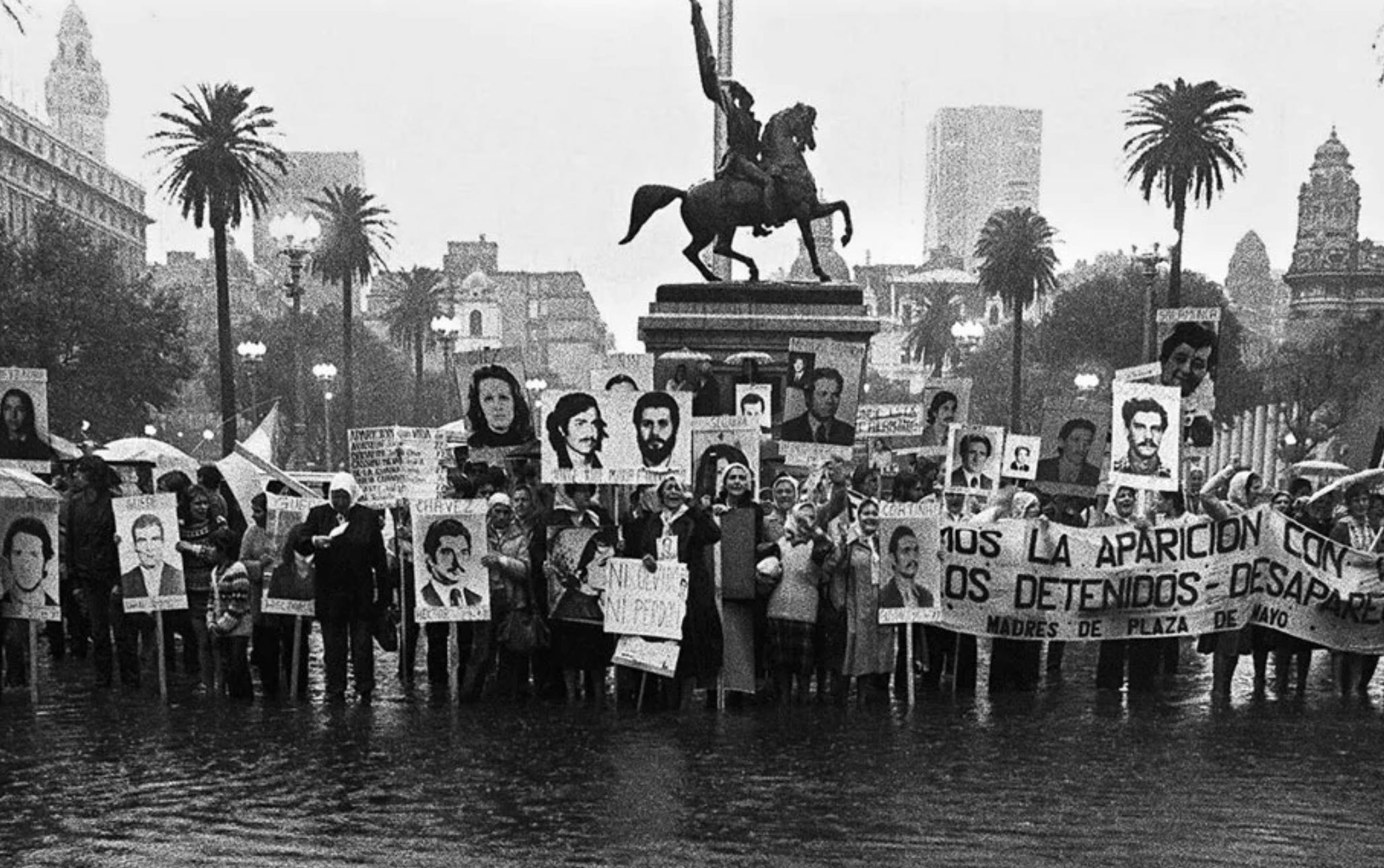
Between 1976 and 1983, as many as 30,000 people disappeared throughout throughout Argentina.
The military junta in power had been tightening its grip on the nation through brutal martial law. In what became known as “The Dirty War,” the regime aggressively cracked down on opposition with censorship and violence.
What began as a campaign to eliminate outspoken agitators ballooned into a paranoid witch hunt against students, professors, union leaders, artists, clergy, journalists, and anyone who might be vaguely associated with ideals unfavorable to the junta. Abductions, torture, and extrajudicial killings were rampant.
Eventually even the families of suspected dissidents became targets of state violence. Children began to disappear. Babies were taken from their mothers and handed to families of the junta’s sympathizers. Pregnant women were kept in captivity until they gave birth so that their infants could be confiscated.
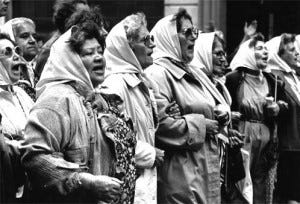
In the midst of these atrocities, a group of grieving mothers became the first to publicly organize against the regime. They marched in the Plaza de Mayo each week, in the shadow of the presidential palace. They wore white headscarves (sometimes made from diapers) to represent the sons and daughters who had vanished.
And the anthem of their protest was an ancient prayer spoken from another mother: Mary’s Magnificat.
The Magnificat
Mary’s famous song from Luke 1 has been cherished by the church throughout history. Newly pregnant with Jesus, she praises God, celebrates his blessing over her life, and rejoices in his mercy.
But woven into her praise is a declaration of God’s justice for the oppressed and God’s victory over oppressors.
51 He has performed mighty deeds with his arm;
he has scattered those who are proud in their inmost thoughts.
52 He has brought down rulers from their thrones
but has lifted up the humble.
53 He has filled the hungry with good things
but has sent the rich away empty.
Luke 1:51-53
Mary’s prayer has been a comfort to the downtrodden across time and place.
“The Magnificat is a revolutionary song of salvation whose political, economic, and social dimensions cannot be blunted. People in need in every society hear a blessing in this canticle. The battered woman, the single parent without resources, those without food on the table or without even a table, the homeless family, the young abandoned to their own devices, the old who are discarded: all are encompassed in the hope Mary proclaims.”
-Sister Elizabeth Johnson
It has also sent a chill down the spines of tyrants.
Bannings
The Argentinian junta saw the subversive power of Mary’s words in the mouths of grieving mothers. They recognized how difficult it would be to control a people who believed that an Almighty God was invested in their liberation. So they banned the Magnificat from public display or recitation.
During the Guatemalan Civil War in the 1980’s, Indigenous Mayan Catholics cleaved to Mary’s words as God’s promise to bring down the mighty. The regime in power, on a warpath to suppress any resistance from the poor majority, saw the prayer as insurgent. Priests and catechists who preached it were threatened, arrested, or killed.
In British India, local Christians read the Magnificat as a declaration of God’s justice against imperial rule. British authorities surveilled and restricted gatherings where it was prayed, wary that its vision of toppled rulers would inflame anti-colonial resistance.
“The Slave Bible” was published in 1807, originally meant as a way of assimilating African slaves in the Caribbean by orienting them to Christian faith and teaching them to read. But it was heavily edited, and Mary’s song, as well as any other scriptures that might inspire ideas of liberation, was redacted.
The Real Mary
Mary’s veneration in the Catholic and Orthodox churches today, while beautiful in its own way, has distorted our memory of who she was when she spoke those words in Luke 1.
Far from the serene, dignified theotokos depicted in traditional imagery, Mary was an unwed teenage peasant girl. She faced the threat of devastating stigmatization for her pregnancy. She would have to flee from a savage ruler who slaughtered countless boys just so he might slaughter hers.
She was a humble human standing on the edge of great darkness and uncertainty. And yet she took solace in the assurance of God’s friendship to the weak. She willed her soul to magnify the Lord in spite of the peril that surrounded her. She drew courage knowing that one day God would reckon with every oppressor, and that his mercy overflows to the meek.
This is the Mary we pray with.
This is the song we inherit.
In it there is an air of defiance against darkness, an aroma of revolution for the exploited, and hope against hope for the weary.
“The song of Mary is the oldest Advent hymn. It is at once the most passionate, the wildest, one might even say the most revolutionary Advent hymn ever sung.”
-Dietrich Bonhoeffer
Practice
“My soul glorifies the Lord
47 and my spirit rejoices in God my Savior,
48 for he has been mindful
of the humble state of his servant.
From now on all generations will call me blessed,
49 for the Mighty One has done great things for me—
holy is his name.
50 His mercy extends to those who fear him,
from generation to generation.
51 He has performed mighty deeds with his arm;
he has scattered those who are proud in their inmost thoughts.
52 He has brought down rulers from their thrones
but has lifted up the humble.
53 He has filled the hungry with good things
but has sent the rich away empty.
54 He has helped his servant Israel,
remembering to be merciful
55 to Abraham and his descendants forever,
just as he promised our ancestors.”-Luke 1:46-55
Three ways to pray the Magnificat:
For yourself
Bring your fear, your weakness, your insecurity, your poverty. Lay it at the feet of the one who can lift you high.
For those who are suffering
Call to mind the victims, the mourning, the sick, the poor, the lonely. Let Mary’s words be an intercession for them.
As an act of resistance
When we pray the Magnificat, we join a long legacy of those who have clung to these same words in the face of great evil. Pray them defiantly, with authority and assurance, against the darknesses of the world.
Amen.
I’d love to hear from you—
Which line of the Magnificat speaks most directly to your own story right now? Why?
What emotions come up for you when you read Mary’s declaration that God “brings down rulers”?
For more on magnifying the Lord:
Your God is Not Big Enough

“All the problems of heaven and earth, though they were to confront us together and at once, would be nothing compared with the overwhelming problem of God: That He is; what He is like; and what we as moral beings must do about Him.”
If this stirred something in you, share it with a friend who’s craving a deeper way to pray:
To receive more posts like this and join the community, subscribe now:

I was in a church choir in my early 20s, and the Magnificat was literally a song in the Christmas cantata. I was mesmerized by the lyrics, but I subsequently heard 2 other songs about Mary and visitation with Elizabeth ; I ended up copying the text in my Bible and memorized it on my morning runs…it certainly didn’t hurt to have John Michael Talbot record a song on the same text!
You can imagine my surprise and delight when I joined the Catholic Church almost 35 years later, and the Magnificat was a part of the Evening prayer in the Liturgy of the hours every evening! I still had it memorized!
Most Holy Theotokos, Save us!