

How to Pray When Words Fail
Sighs & Groans (52 Ways to Pray)

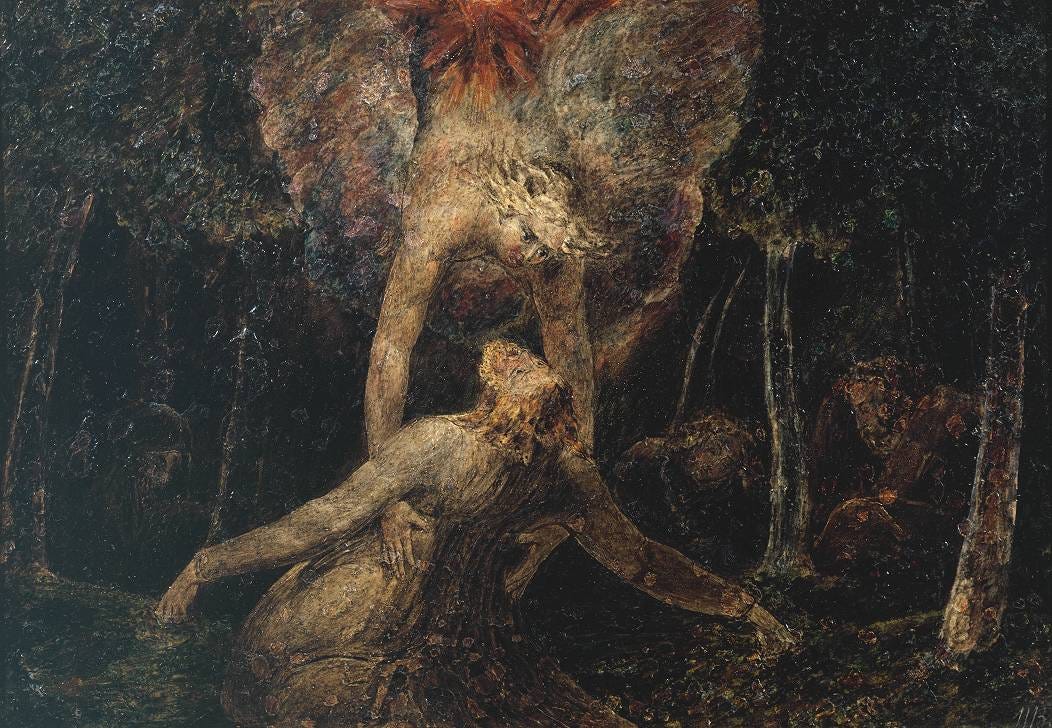
Some prayers sound like poetry. Some prayers sound like labor pains.
Growing up in the church, it was always the poetic kind that seemed most admirable. Those who could pray most eloquently seemed the most “spiritual” in the room.
But Jesus cautioned against the superficiality of prayers that are full of words but empty of honesty.
7And when you pray, do not keep on babbling like pagans, for they think they will be heard because of their many words. 8 Do not be like them, for your Father knows what you need before you ask him.
Matthew 6
The danger of performative prayer is not just that it becomes a stage for stroking our ego—it’s that we begin to perform for God, too. We bottle up our real emotions behind manicured words. We bring him a polished projection instead of our raw, unfiltered selves.
And then, at some point, life snatches away the poetry.
Tragedy strikes. Dreams capsize. Anxiety floods in like a great tide. Evil rears its head. We’re left with no words at all, no vocabulary for what we’re feeling, seeing, experiencing. Our hearts ache. Our bodies tremble. All we can muster are sighs, groans, and tears.
But God has a history of listening for the groans of his people:
23 During that long period, the king of Egypt died. The Israelites groaned in their slavery and cried out, and their cry for help because of their slavery went up to God. 24 God heard their groaning and he remembered his covenant with Abraham, with Isaac and with Jacob. 25 So God looked on the Israelites and was concerned about them.
Exodus 2
Our Father already knows what we need. He is not waiting to hear the right words before he moves toward us. When words fail, our groans are enough.
Somatic Prayer
Leading trauma researchers Peter Levine and Bessel van der Kolk (author of The Body Keeps the Score) have shed light on how our mental, emotional, and spiritual wounds burrow into our bodies. Healing, then, cannot be a merely cognitive pursuit. If grief and sorrow are lodged in our flesh, then they must make their way out by our flesh as well.
Sighing, groaning, weeping, trembling, screaming—these can all be powerful therapeutics for releasing bottled-up pain and relieving our burned-out nervous systems.
These expressions come forth from someplace in us other than the lofty pretension of our rational minds. They boil out of the very center of our bodies, the center of who we are. They are the native tongue of our most primal selves. And when we let go of our need to explain ourselves, they can become a sort of somatic prayer that unleashes our despair and opens us to the touch of God. The body prays what words cannot say.
“For the Lord was moved to pity by their groaning because of those who oppressed and afflicted them.”
Judges 2:18
There is a time, of course, to speak to our souls, to will ourselves in faith to stand on hope in spite of our anguish. But there is also a time to let the pain work its way through us, to feel every last drop of it, without patronizing it with pretty words. To let God hear our most guttural cries.
In Romans 8, we read that creation itself is groaning. Humanity is groaning. The Spirit is groaning in us and with us. This is the language between us that no one ever had to teach us. As we grow from infancy we learn to form words, to make sentences, to articulate ourselves. But we are born fluent in groans, sighs, and cries.
I’ve sprawled on hotel floors, groaning to God. I’ve wept alone in my car. I’ve walked miles in furious silence, giving God nothing more than sighs.
And all this is prayer, too. It may even be the truest prayer I can give.
Practice
Get alone. In your car. On a long walk in the woods. In a closet.
Resist the temptation to pasteurize your prayers with words. God knows what you need. He wants your unfiltered soul.
Let it all go.
“But when a profound reflection had, from the secret depths of my soul, drawn together and heaped up all my misery before the sight of my heart, there arose a mighty storm, accompanied by as mighty a shower of tears.”
St. Augustine, Confessions
Amen.
I’d love to hear from you—
What does “letting go of pretty prayers” mean in your story?
What does groaning prayer look like for you in this season?
For more on embodied prayer:
Cognitive Obesity & The Flesh That Prays

“Still our body is a good thing. God made it for good. That is why the way of Jesus is so relentlessly incarnational.”
If this stirred something in you, share it with a friend who’s craving a deeper way to pray:
To receive more posts like this and join the community, subscribe now:

Where is the book 52 ways to pray?