
Don't Just Study Scripture--Step Inside It.
Imaginative Prayer (52 Ways to Pray)

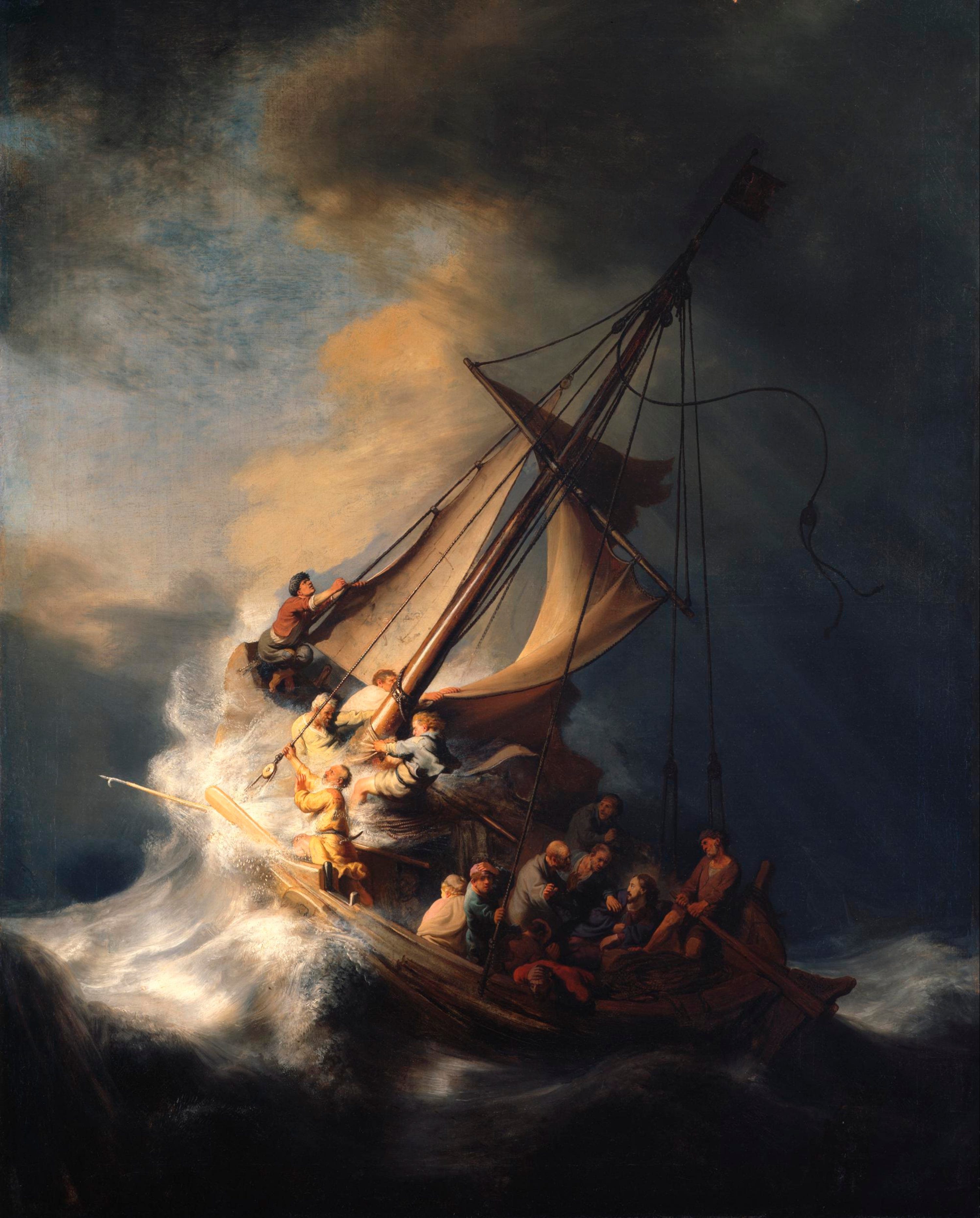
The deck lurches beneath our feet. Another wave crashes against the hull, spraying our faces with cold water.
The night and the sea are blending together into one grim, swirling darkness. We’ve lost our bearings—we don’t know where we are.
Then a shrill moan rises through the noise:
“It’s a ghost!”
In unison we follow our brother’s gaze across the water. The fog and the night make everything look like twisting shadows under the moonlight. We see nothing at first—surely our friend was fooled by the darkness and his own paranoia. Sailors often imagine specters on the water at night.
But then the man to my right repeats the call, this time with an edge of terror, “It’s a ghost!”
We look again, and our hearts drop as we see it.
A gray figure striding out of the mist. He’s heading straight toward our tossing ship, crossing the breakers effortlessly.
The din of the sea seems to melt away—all I can hear now is my heart beating in my ears. Could it be the sea demon that the old sailors tell horror stories about?
As the stranger draws nearer, our crew cowers together on the far side of the deck.
He’s close now, reaching a shadowy arm toward us, and it feels like an anchor has dropped in my stomach.
We’re alone. We’re lost. We’re doomed.
Then a new voice calls, like a clear ringing bell above the noise:
“Take courage! It is I. Don’t be afraid.”
I know that voice.
The fear pours out of me like a waterfall; a rush of cool air soothes my trembling body. Relief and ridiculous joy flood over me. Without even realizing it, I’m laughing hysterically.
It’s Jesus.
When we read scripture, we have a choice. We can study it like a textbook, gathering information and ideas. Or we can enter into it, experience it for ourselves, and let it form our hearts.
Imaginative prayer was a hallmark of St. Ignatius’ Spiritual Exercises. It’s a way of approaching the Bible so that “we become one of the characters, seeing the story unfold from the character’s viewpoint.”
Jan Johnson has called this “the movie method,” where we participate in the events of scripture like a character in a movie.
Ruth Haley Barton has written about the difference between grasping information from scripture and living in scripture.
This way of seeing God’s word would have been intuitive to many earlier generations of the church. The events of the gospel were still seen as experiential realities that could be actively re-experienced through prayer, worship, the sacraments, and iconography.
But in the wake of Enlightenment rationalism, where we’ve come to see knowing as a matter of rational inquiry, we have left our imaginations behind. In so doing, we have lost touch with a powerful part of how we know God, rather than just know about God.
Imagination is, in the words of the developmental psychologist James Fowler, “a powerful force underlying all knowing.” Just like you could not truly love your spouse only by knowing a lot of information about him or her, we cannot truly know God by only studying his word—we must live, experience, and imagine his word.
“A retrained imagination becomes a powerful force in God’s hands.”
—Jan Johnson
The scene above comes from Matthew 14, just before Jesus calls Peter to walk out on the water. This was my experience using imaginative prayer to place myself inside the story. A passage that I’d read countless times and heard countless sermons about suddenly became personal, visceral, real, in an entirely different way.
I felt the churning of the waves beneath my feet on the deck of the ship. I heard the howl of the stormy night. My heart rate quickened as I joined in the fear of the disciples. I felt my face get hot envisioning a ghostly figure approaching.
Then I felt a wash of relief and joy with the realization that the fearful ghost was actually Jesus. I couldn’t help but laugh out loud—just as I imagine the disciples would have done, cracking jokes at one another for how afraid they were. The smile on my face was as real as any, soaking in the delight of being surprised by Jesus.
Practice
“First, however, it is worth reminding ourselves to read the biblical accounts as if what is described is happening to us. We must make the conscious effort to think that such things might happen to us and to imagine what it would be like if they were to happen.”
—Dallas Willard
1. Choose a passage.
Ideally, pick a scene or narrative moment. Then read the passage two or three times to familiarize yourself with it.
The friends lowering their paralyzed companion through the roof to Jesus.
The woman pushing her way through the crowd to touch Jesus’ cloak.
The prodigal son falling into his father’s arms.
John the Baptist witnessing heaven open over Jesus’ baptism.
2. Ask God to sanctify your imagination.
Invite the Holy Spirit to inhabit your creative mind, making it fertile ground for prayer. Surrender your thoughts to God so that he can steer them.
3. Enter the scene.
Close your eyes and try to step into the passage in your imagination. Choose a person or a perspective to take on inside the moment.
Where are you in the scene? Who are you standing near? What is your posture?
Let yourself “daydream” about the story. Let the scene unfold. Be open to elaboration.
4. Engage your senses.
What do you see?
What do you hear?
What do you smell or feel?
5. Take note.
Be curious and observant about what is happening in your heart, mind, and body.
What physical sensations are you feeling? Are you warm or cold? Relaxed or stimulated?
What is your mood toward the experience? Does it feel ominous? Comforting? Invigorating?
Pay attention to any words, sights, sounds, or other details that stand out to you.
6. Listen.
Ask God:
“What are you saying to me through this scene?”
“What invitation are you giving me here?”
“Is there anything you want me to do, receive, or release?”
7. Reflect.
Before you end your practice, take a few moments to reflect on what you received.
How did this imaginative approach change how you saw the passage? What new perspective or feeling came up?
Amen.
I’d love to hear from you—
Does imagination come easily to you, or does it feel foreign or uncomfortable?
What emotions or sensations came up for you as you imagined yourself into a passage?
You might also like:
If this stirred something in you, share it with a friend who’s craving a deeper way to pray:
To receive more posts like this and join the community, subscribe now:

I’ve been going through the Spiritual Exercises during my daily walks during Advent, so vivid, to reflect on all the sight, sounds, all the senses in each scenario!