

Awe as Prayer
Awe Walk (52 Ways to Pray)

I feel like I live in a wildlife preserve.
We recently moved to Charleston, SC and our neighborhood, which sits at the edge of vast marshland, is full of natural intrigue.
Palm trees alternate with oak trees draped in Spanish moss. You can smell salt and mud when the wind blows the right way.
Ponds sprawl along the roadsides; geese patrol the banks and turtles and alligators lounge in the sun.
My favorite are the great blue herons. These towering birds wait by the water, still as statues, until they spy a glimmer of fish scales beneath the surface. Then they unfurl their massive wings and glide effortlessly, almost casually, to scoop up their prize.
And all these creatures are utterly unbothered by us.
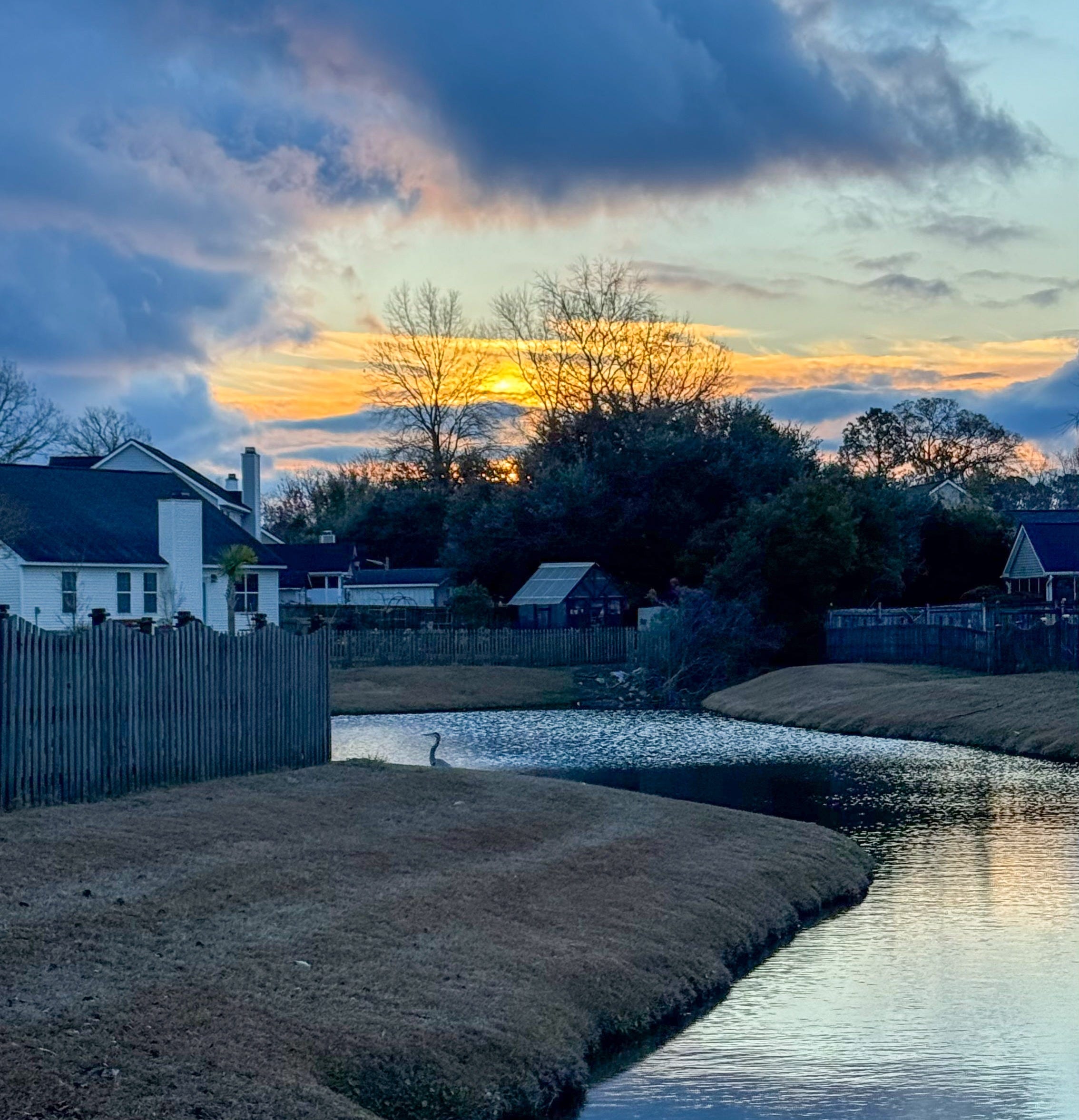
It really is a dream in a lot of ways. Half the time I’m too busy, too distracted, too hurried to really appreciate the wonder that surrounds me. But when I pause long enough to take it in, I’m filled with awe at the slow, unbothered beauty of creation.
Awe is a powerful thing. Psychologist Dacher Keltner (UC Berkeley) is the father of modern research into the nature of the emotion of awe and its effects on our mind and body. Awe has been found to yield a litany of therapeutic physiological effects—lower cortisol levels, decreased inflammation, increases in immune function.
The most powerful feature of awe, however, is how it affects our brains. When we are experiencing awe, the systems in our brains that are associated with self-consciousness turn down like a dial. Awe actually quiets our internal chatter, that buzzing rumination that sources so much of our anxiety, and lifts our perspective to the wide open world around us.
That is a holy exchange.
I’ve come to see awe as a profound form of prayer. When we enter into awe and wonder, we are liberated for a while from the dank, cramped confinement of our own minds. We stop being the center of our own world. We become open to noticing and witnessing the glory of God that’s always surrounding us, that we so often overlook.
“Earth is crammed with heaven. And every common bush afire with God. But only he who sees takes off his shoes.”
Elizabeth Barrett Browning
Awe is not just a feeling that sometimes comes upon us. It is a posture we can consciously cultivate. For this, Keltner recommends a practice that he calls the “awe walk.”
“An Awe Walk is a walk within a place of meaning and beauty, where your sole task is to encounter something that amazes and transcends, be it big or small.”
Dacher Keltner
Cultivating awe is ultimately about awareness. It’s about declining the default hurry of our lives and instead becoming deeply present in this moment, realizing what we’ve been missing.
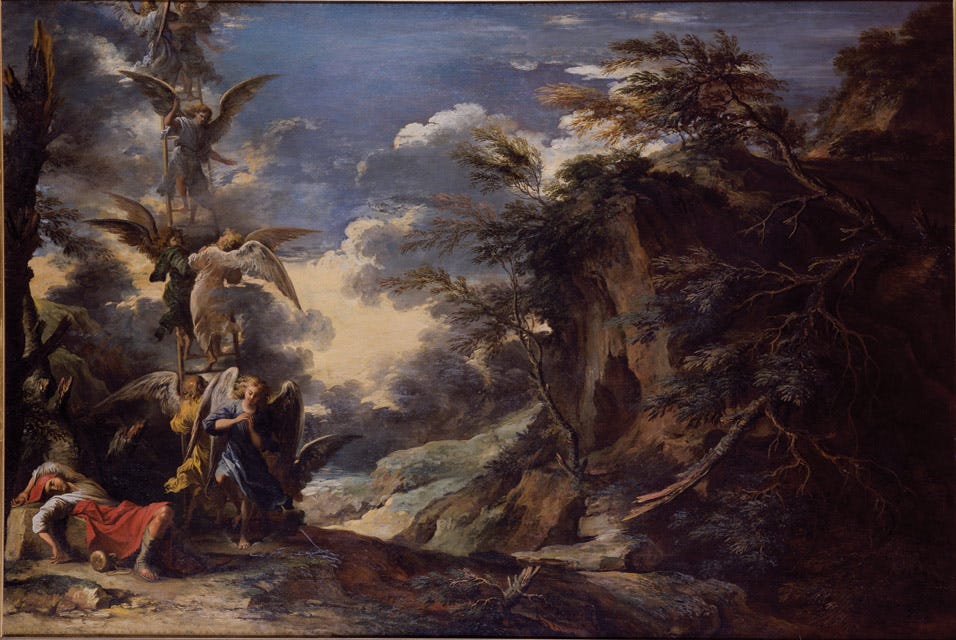
I see Jacob’s revelation at Bethel, where he awakes from a dream and declares “Surely the Lord is in this place, and I was not aware of it” as a picture of the kind of waking up that our souls need. (Genesis 28:16)
Now that he’s awake, Jacob realizes that this nondescript patch of rocky earth is actually holy ground:
“How awesome is this place! This is none other than the house of God; this is the gate of heaven.” (v. 17)
Practice
“There are only two ways to live your life. One is as though nothing is a miracle. The other is as though everything is a miracle.”
Albert Einstein
Find a place.
This practice fits naturally on a hike through the mountains, a walk along the beach, or a stroll through the forest. But you don’t have to go somewhere exotic to enter into prayerful awe. In fact, there’s something even more meaningful about being able to appreciate beauty in the ordinary neighborhoods of your life. A simple walk outside your home will do just fine.
Get grounded.
Take a few moments to become present in your body. Close your eyes and take a few long, slow breaths. Notice your knees, your elbows, the back of your neck, your fingertips. Feel your chest moving with your lungs. Feel your feet on the ground.
Pray for awareness.
Pause and ask God to awaken you from your normal sleep-walking way of life. Ask for sensitivity and perception. Ask him to heighten your senses. Ask him to help you notice what’s around you, and his presence within it all.
Tune into your senses.
As you walk, focus on what you hear, what you see, what you smell, what you feel. Let your attention rest on your senses rather than on your thoughts.
Notice.
Be on the lookout for what draws your curiosity. The ripples on the water. The design of the clouds overhead. The cadence of the bugs buzzing. The formation of the birds flying. The pattern in a leaf. The shape of the cracks in the sidewalk.
Resist the natural urge to judge or analyze your experience. Let yourself be open and playful.
Remember your Creator.
Remember that creation is not some abstract metaphysical idea. It is tactile and visceral. It is soil and animals and the feel of the wind. And it all, ultimately, was spoken into place by the same God who loves you.
What does that mean to you? What might God want to remind you of?
Amen.
Comment below:
What’s the last moment of wonder that stopped you in your tracks?
What helps you slow down enough to actually notice the world around you?
If this stirred something in you, share it with a friend who’s craving a deeper way to pray:
To receive more posts like this and join the community, subscribe now:

Grace and peace.
-gb
Thank you for the excellent list of practices for awe and wonder. I've very much endeavored to move in the world in this way for many years, and I can attest that it really does work as you say!
You also remind me here of George Washington Carver, whose museum (and gravesite) I recently had the opportunity to visit in Tuskegee, Alabama. Carver was clearly a mystic as well as a scientist, and I think he practiced exactly that kind of awe/wonder that you describe here. “All my life,” he said, “I have risen regularly at four o’clock and have gone into the woods and talked with God. There He gives me my orders for the day. Alone there with the things I love most, I gather specimens and study the great lessons Nature is so eager to teach us all.”
Or, as he also said, "I indulge in very little lip service, but ask the Great Creator silently, daily and often many times a day, to permit me to speak to Him through the three great Kingdoms of the world which He created—the animal, mineral and vegetable Kingdoms—to understand their relations to each other, and our relations to them and to the Great God Who made all of us."
Yes, even in the neighborhood! During COVID we were restricted from a lot of our favorite walks and hikes, so we carved out long walks in the neighborhood, and began to take notice of how the neighborhood looked different during various times of day, trees and sky. As you described, we cultivated awe! This paid dividends, we learned to pay attention; when we finally did get to the mountains, the awe couldn’t be contained!